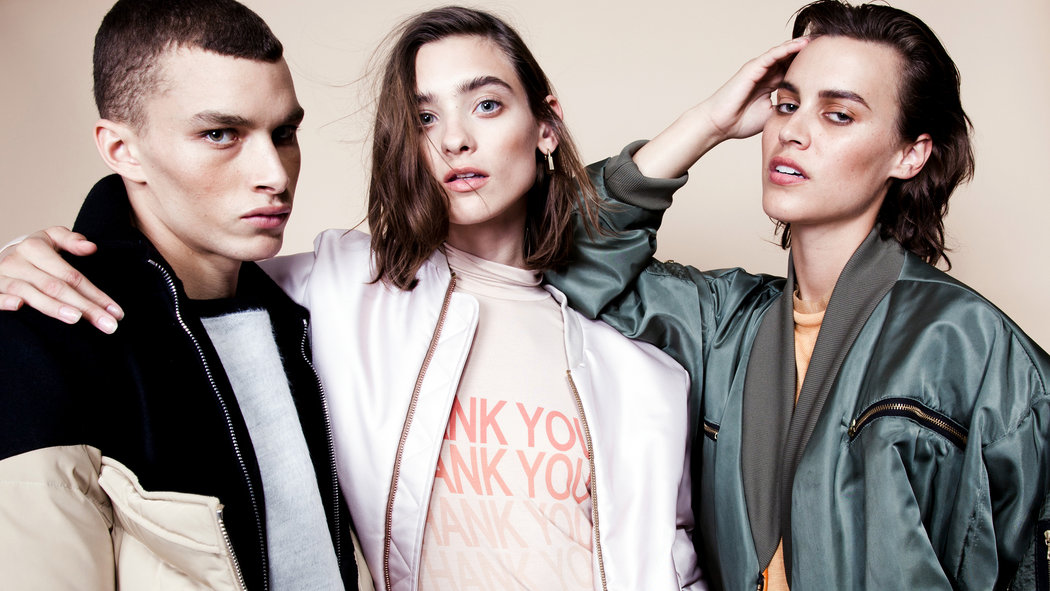
Should Non-TG actors play TG Characters?

04TRANSGENDER-blog427Photo from NYTIMES

Yes, they should.

The question, and my response, arise in response to a recent New York Times article discussing the casting of Eddie Redmanye and Elle Fanning to play transgender characters even though neither publicly identifies as being transgender.  Some groups and individuals have raised concerns, saying only actors who identify as transgender should play transgender characters..

I can summarize my feeling on this issue pretty simply:

  1.  We are not our bodies
  2. We are not what other people tell us
  3. We do not have to choose to identify as anything
  4. No one should be pressured into “outing” themselves.

To focus on item three, the pressure to put myself into a box and slap a label on my forehead tortured me throughout my life, and the need of others to label me created conflict where there didn’t need to be any.   I do not like labels, and I do not think we need to live in a world where every character and every actor has to be assigned a label and put into a box–  oh, that’s that transgender actor… or that gay actor… or that ingenue, or whatever.  Because people couldn’t figure me out they labelled me with things like girly boy, or they lisp he’s sensitive at me like being sensitive was a crime.   Some people called me a freak and a deviant.   That was where the drive for labels took me.  Do I want to be labelled?

NO.  We are are all more than labels, we all contain multitudes.  Am I a girlish boy?  A boyish girl?  I don’t have to choose.   I feel different things different days and different times, and my dream would be to live in world with more choices, more freedom and less labels.

The film makers can and will cast the actors they want to cast.  That is their right.   They want to make the best movie they can.  Some will not like those choices, and they have a right to express their feelings as well.

But I, for one, will never raise my hand and scream,  “LABEL ME!  Give me a bar code!  Put me in on a box on a shelf!”

I transcend all labels.  And you do, too.
New York Times on Casting

Wild Cards, a princess and a pregnancy (Spoilers)

wildcards

How would a man react to being turned into a pregnant woman?

The Wild Cards series of books, edited by George R.R. Martin was set in a version of our world in which a strange virus mutated some of the population, giving super powers to a few and making others into grotesque outcasts.  In Book 9, Jokertown Shuffle, things got TG to the extreme when the very male Dr. Tachyon is switched into the body of a teen-age girl by his own sociopathic son.

The story line delved into some ugly realities faced by women–  Tachyon is raped and abused by his son– in way I had never seen up to that point, and it juxtaposed that story line brilliantly with a fairy-tale princess vision of reality, with Tachyon finding himself a damsel in distress, having dreams where he is in a Alice in Wonderland fairy world, passively hoping to be rescued by a mysterious figure known as The Outcast.

The combination of these various very feminine/female fears and fantasies being imposed on a man fascinated me, delving into those questions of behavior and the line between biology and free-will.  Tachyon, initially horrified to have something growing inside him, quickly becomes overwhelmed by his body’s maternal instincts, and helpless and desperate, he just as quickly embraces his role as a pretty young princess, dependent on a man to rescue and protect him.

At the time, I felt the book very clearly fell on the side of biology.  It seemed to say–  put a baby in a man’s belly, and he will become a mother, put a man in a woman’s body, and he will start to have female fantasies.   I feel now, re-reading the book, that I may have misjudged.  Tachyon does not just find himself in a young woman’s body– he is subjected to brutality and abuse, rape, physically and mentally tortured and imprisoned.   Could many of the behaviors that I thought were biological actually be the result of the experiences he suffered?

Clearly, these things all would have an impact, so that whatever the biology and brain chemistry he found himself swimming in as a man in a pregnant woman’s body, the abuse and imprisonment also shaped his reactions and feelings.  Abortion wasn’t an option.  He had to carry the baby, and so he chose to dedicate himself to being the best mother he could be to his unborn child.

I remain fascinated by the fairy tale elements of Tachyon’s journey into motherhood and the impact being turned into a damsel in distress had on him and might have on other types of men. It’s something I have explored and continue to explore in my own writing.  Many of my stories use fairy tale tropes and Jungian archetypes, and I continue to like to write about the interaction between biology, environment and culture when it comes to gender identity.  I think there are some men out there who would become good mothers, but my feeling is that most of them would not primarily due to fear and ego.  Maybe I’ll write about that sometime soon.

Check it Out on Amazon!

NY Times on blurring gender lines

20GENDER-slide-YNHK-videoSixteenByNine1050-v2

Breaking Free of Boundaries

I dream a dream of fashion anarchy, where people just wear what they want depending on who they feel they are on a given day or a given time of life.

And unisex clothing is not the answer.

Today’s New York Times features an article on the blurring of gender lines in fashion, with more and more designers opting for unisex clothing lines in which all their items are sold without any male/female labeling or identification. The clothes are awesome, and I support and applaud anyone who likes them and wears them, but I long for a more expressive world.

And what would that more expressive world look like?  That world, to me, would include fashions that fell everywhere from the extremely feminine to the extremely butch, and in my world people could wear whatever they felt like on any given day in any given season.  If a woman wanted to dress in “dude” clothes, she could, or unisex, or if she felt like getting all dolled up and showing off all her curves, that would be fine, too on any given day for any reason.  Ditto a man.

What I see in the pictures that accompany the articles are a bunch of gorgeous, rail-thin models with androgynous features, all hints of curves or angularity hidden beneath loose, baggy clothes. The designer Kimberly Wesson, who wears her own unisex fashions, complains that her friends plead with her to wear a “sequined skirt” or to dress like “Joan from Madmen.”  Her designs are great, and she should wear the hell out of them, but why create a new set of restrictions in which unisex is an iron-bound fashion rule just as a inflexible and rigid a code as any other?  In which people are hiding their bodies?  In the name of being gender free, do we have to become gender-less?

I realize my vision for an expressive world that opens up opportunities for expression and includes more rather than less options may well be an unrealistic fantasy.  Even in my own writing I have yet to write a story where it exists, though maybe I will now that I think about it.  I think any trend that involves blurring of gender lines is a good trend.  The article asserts that more and more members of the younger generation are comfortable with gender free clothing, though, predictably, this trend is more female-centric as it has long been more acceptable for women to adopt men’s fashion that the other way around.

The changes are good, and I applaud all of the designers moving away from rigid notions of male and female clothing, but I want more.

I dream a dream of fashion anarchy, where people just wear what they want depending on who they feel they are on a given day or a given time of life.  I want total freedom all the time for everyone.

Zerophilia and the Freedom to Choose

Warning:  Spoilerish Material Included!

zerophilia

Image:  Luke in female form with his best buddy.

Do you want to be a guy?  Or a girl? You can be one or the other, but not both. You have to choose.

This message is delivered to Luke, the main character in Zerophilia, who has discovered that he can switch sexes.  His buddy wants to him to stay a dude and can’t understand why anyone would want to be female.  His buddy’s girlfriend, on the other hand, thinks it would be fine if he decided to become a girl full time, and she even buys him a dress.  They all tell him they are fine with whatever choice he makes, but they do want him to make a choice.

What does Luke want?  Luke wants both.  He is attracted to both men and women, and though he rebels against the notion of becoming female, he ultimately goes so far as to put on a dress and make out with a boy he has a crush on.  Luke is not only ambivalent when it comes to his sexual interests, but he is sweet and sensitive while also loving sports and driving around in a big truck.  In other words, he lives in a world where he is both masculine and feminine, and he has never been able to choose just one.  This beautifully blurry existence continues even when he is unwillingly trapped in a female body.

The film has a happy ending for our protagonist and a positive message for those who shift along gender lines.   It turns out that all Luke needs to do is find someone else like him, someone else who kinda sort likes being both masculine and feminine.  When Luke does find his “soul mate” we see their relationship in montage; sometimes Luke is the girl, sometimes he is the guy, sometimes they are both guys, sometimes both girls.

The films message?  Those who don’t care to choose don’t have to choose.  They just have to seek out their tribe and find people who are cool with gender fluidity.

Check out the website, and Zerophilia is currently available on Amazon.com instant video as well!

http://www.zerophilia.com/

Amazon

http://www.amazon.com/Zerophilia-Taylor-Handley/dp/B005MHSA3A/ref=tmm_aiv_swatch_0?_encoding=UTF8&qid=1439348072&sr=1-1-catcorr

Turnabout Intruder: Thoughts and Speculations

turnabout

“She could have had as rich a life as any woman.  If only… If only….”

The last lines of the last episode of the original Star Trek television series, and the first body swap story I remember ever seeing.  I was young– pre-teens, and I loved Star Trek, which was in constant re-runs on the UHF stations that broadcast out of Detroit back in the 1970s.

Growing up without a father, I had chosen Captain James T. Kirk as a hero and role model, so it was a strange and fascinating thing to see this episode in which he found himself trapped in the body of a woman.  My hero?  my role model?  A girl?  Yet, early in the episode, the characters who put Kirk in that body still refer to him as a he, despite the female form.

Aha!  That excited and interested me.  He was still a he, even though he was a girl?

The episode raised a lot of questions that I had never really consider, particularly in the court martial scenes. “You claim to be Captain Kirk?”  Lester asks, smirking and laughing at the red-haired woman wearing some kind of weird mod pantsuit.

“No,”  Kirk answers.  “I claim that whatever makes James Kirk a unique entity is being held in this body.”    What I heard him saying, though I didn’t have the words, was, “I am not my body.  The thing that makes me who I am is not this woman’s shape.”

The essence of a person, their gender, their THEM, was independent of their form.  Being, to borrow philosophical terms later in life, was independent of essence.

The iconic nature of the role reversal that lit up my young mind.  Kirk, in the woman’s body, being carried around effortlessly by the man, like the women on the covers of my mother’s romance novels.  Kirk on his knees after being physically over-powered by his former male body.  Kirk, reaching for and grabbing Spock’s hand.  Placed in a woman’s body, Kirk was forced into a woman’s traditional role, pleading with the men in his life to rescue him.  In the end, of course, he saves himself through action, as men are supposed to do, but it is not as a man that James Kirk saved himself; it was as a woman, and that to me seemed to suggest that biology was not, as some would suggest, destiny.

Though I believe it may have been an attempt at a feminist statement, the episode has since been condemned for being sexist, retrograde.  The woman in Kirk’s body is prone to fits of hysteria, loves to file her nails and proves incapable of commanding a star ship.  At one point when she complains about the lack of opportunity for women,Kirk agrees with her that life is unfair for women, but with the kind of dismissive “Whaddya gonna do?”  attitude that is still far too prevalent.   The last lines of the episode are specific.   She could have lived a life as rich as any woman.  Not, clearly, as rich as any man, which was the real issue.

Still, I feel it holds up well both as an exploration of the cost of gender bias as well as a exploration of a body swapping gender reversal.  In the end, Lester’s ultimate defeat and punishment is to be trapped in a traditional gender role– to be dependent on a man for her care and protection.  What could be a more powerful statement against the notion of domestic bliss as the be all and end all for women than the image of a woman, broken and weeping with despair at the thought of being stuck marrying a doctor who wants her to just stop striving and be his wife?  And that was back when television shows portrayed that every woman on Earth creamed her jeans at the thought of marrying a doctor.

If you haven’t seen it, or haven’t seen it lately, check it out on Amazon or Netflix,  Sandra Smith is great as Captain Kirk:

http://www.imdb.com/title/tt0708485/