Transparent (Spoilers)

transparentwedding

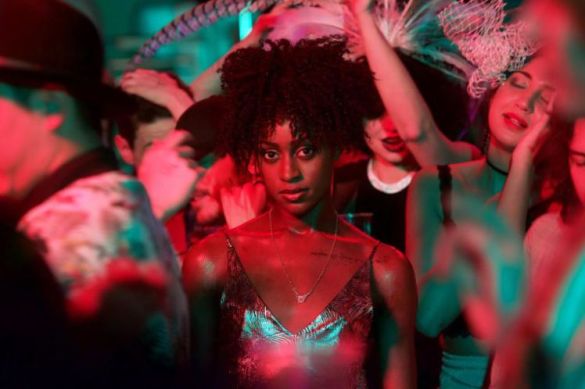
So, I finally watched Transparent, mainlining the two existing seasons over the course of a weekend.

And I don’t know what to say.

I liked the show.  I found it very watchable, and I feel it won on all fronts from a creative perspective: great writing, acting, directing, music.  However, The Pfeffermans are horrible people.  Unbridled narcissists, they crash into the lives of much nicer, more caring people and remorselessly shred their psyches and then cast these people aside like outgrown toys, occasionally popping back in to see if they can inflict new pain upon their victims.

Transparent feels very much like a soap opera, where a lot of the drama is driven by the lurid pleasure that comes from watching these people lure one victim after another into their web of lies and then wait for the moment when the poor person realizes that they are just another victim of a very sick family.

What makes Transparent different from Falcon Crest, however, is that many of the characters, not just the father, find themselves exploring their identities, sexual and gender.  The father, Maura, has come out as transgender and expressed her desire to live as a woman.   Sarah leaves her husband to rekindle a lesbian relationship she had in college.  Gaby pursues both a trans man and later a lesbian relationship with an old friend and one of her brother’s former conquests, and Shelly, the mother of the family, explores a lesbian relationship with her former husband.  So, with the exception of the son, so far, they are all what I would call genderfluid, open to exploring their own sexualities if not always very accepting of others.

But they are all assholes! Narcissists. They are a prevalent stereotype of LGBT people as people who love only themselves and do not seem to care at all how their actions impact others.  They are always me, me, me, and they lie and abuse people with impunity. So, isn’t it a problem that this show, being lauded as a ground-breaking step forward for LGBT people, portrays LGBT as horrible, selfish parasites?

No, and for this reason; because it is just like Falcon Crest. Or Dallas.  Or countless other shows where rich, entitled turds go around being selfish and abusive toward others. Transparent is not a documentary or an after-school special. It is a soap opera, and nice people are boring, so naturally these characters need to be flawed and terrible, because that is what viewers find entertaining.  No one is going to tune in to watch a well-adjusted family work out their problems like mature adults.  No one.  No one is going to tune in to watch a happily married couple go on an uneventful vacation.

There needs to be conflict.  Disaster.  Bad thinking.

In addition, among the victims suffering for the misfortune of getting involved with any of the human misery machines known as the Pfeffermans, are straight and LGBT characters alike.   We see that in the world there are good and bad people, and some of them are straight and some of them are not, and it is a good thing that this show can portray a balance.

If I were going to fault anything it would be the classification of this show as a comedy.   It seemed very clearly a drama to me.  There are some funny moments, but they emerge out of dramatic situations and are far less frequent than more dramatic moments.  It seems to me that the only reason that anyone would find this to be a comedy is if they are an immature person who thinks anything with non-traditional gender roles is automatically funny.  There is a scene, for example, where Maura has decided to perform at a LGBT talent show, and as she comes out and begins to sing all of her children begin laughing uncontrollably and then flee the room in the middle of her performance.

When Maura first emerged onto the stage, I was thinking– yes!  Do it!  Live your life!  I didn’t find it hilariously funny that she would have the courage to get up there and do it. Not at all.  Nor did I find it hilarious that her children would burst out laughing and then run out of the room.

But then I am one of those kind-hearted folks that people like the Pfeffermans would prey upon, so maybe that is why I found it sad people would be so hateful toward their own parent.

Transparent is a soap opera, and I would say a good one.  Season Two got more and more into gender identity, and I found it more and more interesting.  I am looking forward to the third season.  To me, I would call is Falcon Crest in transition.

If you are looking for a show about good people who are interested in growing and becoming better people– for real, not just for fashion– this probably isn’t the show for you.  But if you want to see horrible people being horrible, check it out.

Free on Amazon Prime


The Danish Girl (Spoilers)

Lili_Elbe_1926

Am I insane? 


Einar Wegener.  The protagonist of The Danish Girl.  Is haunted by this question throughout most of his life.  Am I insane?

He has always felt that he was a female.  But he has a male body, so he has learned to repress who he is, to consider his female identity something to be hidden, a source of shame. Something wrong.

But he is not Einar Wegener.  He is not a man.  She is only pretending to be Einer.  She is Lili Elbe.

I try to avoid reviews and plot summaries, so I am going to focus on one aspect only of the film, and that is the role that Lili’s wife played in helping her to emerge.   Gerda, a true artist, saw the truth even before she knew what she saw.  She sketched and painted the biological male she had married as a beautiful woman, often placing her in scenes of lesbian erotica.  At the time, Lili was still pretending to be a man named Einer, but as her wife painted her, and those painting and sketches ended up bringing Gerda international fame and success, Lili was able to emerge, facing the fears and resistances of the world.

Lili, while still living in man’s body, had become an international success as a female model.

lili3

It must have been so exciting for her to see the truth of her identity validated by her wife, and by the public’s celebration of her, and I have to believe it not only brought her great joy but also the courage to fully reveal herself to the world and ultimately pursue what was at the time dangerous and life threatening surgery.  She had seen her true self painted, represented, loving presented to the world by the woman she loved, and she could and must take the risks and face whatever challenges she had to face.  Among those fears and risks was the possible loss of her relationship with Gerda, whom she did love very much.

In the movie, Lili’s end is joyful and sad.  After going in for her second surgery, she loses a great deal of blood she is near death.  Gerda is with her, and Lili tells Gerda she had a dream in which she was a baby in her mother’ arms, and her mother looked down at her and called her Lili.

She is radiant with joy recounting the dream.  She, Lili, has fuly accepted who she is, and she believes her mother has accepted her, too, and so she dies joyful, at last having become physically the woman she always knew herself to be, and having been accepted and loved as that woman.  She dies happy and at peace, with the woman who loved her and supported her and let her live her life freely and openly at her side.

The ending of the movie is not true. Lili died after her fourth, not second surgery.  She had gone in for a fourth surgery in order to have a uterus implant in the hopes she could have a baby.  She wanted to be a woman fully, and to have the child of a man she had fallen in love with.

Gerda was not there at Lili’s side when she died.  The two had separated after a Danish court invalidated their marriage in 1930.  Gerda had moved to Morocco, and when she heard of Lili’s death she is said to have replied, “My poor little Lili.”

lili2


Tangerine: Spoilers

maxresdefault


The film Tangerine explores the lives of two transgender friends living in Los Angeles, features transgender performers in the lead roles, and explores and celebrates their lives and struggles without ever being self-consciously a statement about transgender issues.

What I mean is that this film is a film about people.   And in the same way a similar movie might have been about two friends who happened to be straight, or two friends who happened to be doctors, or any two people who happened to be other things, this one explores the lives of two people who happen to be TG, but who are not limited by that aspect of their identities, and who are neither valorized or mocked because of it.  There is no sense that the audience has any obligation to pay special attention to the fact that they are TG, or to view the film like a movie in a sociology class where the subtext is, “This is how TG people put on their shoes!”   They are people like other people, and that is among the film’s triumphs.

And what do these people want?  The same things as everyone else: they want to be valued, loved, understood, and it is their pursuit of these universal human needs to drives the drama of the film and almost brought me to tears on several occasions.

Alexandra has planned a big concert and invited all of her friends as well as everyone else in the neighborhood.  She loves to sing and hopes for a special evening sharing her love with her friends, who have all enthusiastically promised to come see her.   When she gets to the venue, not even one person has shown up, and she stands outside arguing with the manager, insisting that people are on the way, refusing to believe that not even a single person cared enough to make it to the show.  I ached for her both because she had been abandoned, and because she refused to believe she had been abandoned.  I know that feeling.   When I was a kid, the last time my mother tried to throw a birthday party for me no one came.  No one.   And I could see the pain and shame she felt as much as I felt my own.  I didn’t even realize no one liked me until I was sitting there in our dirty little house, watching my mother calling neighbors and listening to their excuses.  I know that feeling and experience is shared by many people who are not “normal.”

Finally, one person does show up, Sin-Dee, who has brought along a woman she is kidnapping–  see the movie– and Alexandra performs for her friend and the other lonely people who spend their Christmas Eves at seedy bars.

Sin-Dee is the more temperamental of the two, and her quest on this Christmas Eve has been to find the woman who has been sleeping with her boyfriend and confront them.   During this confrontation, she learns that her boyfriend has cheated on her not only with the one girl, but also with her best friend, Alexandra, whose concert she alone cared enough to see.

The second betrayal breaks her heart.   She is devastated, and she wanders off into the night to turn some tricks, looking for some way to get out of herself, to stop feeling what she is feeling, only to have a car full of frat boys throw a bottle of piss in her face.

The movie does, in scenes like the one above, show some of the abusive behavior with a transgender person might face, some of the disgusting acts that happen.  These women are as far from Kaitlin Jenner and the Victoria’s Secret fashion show as you can get, and their lives are full of hardships, not magazine covers celebrating them for their courage.

So, when Sin-Dee is horrified, despairing, broken, who comes to the rescue?  Alexandra.   She comes over and helps her friend, and the two of them at least have each other.  They are not along on Christmas Eve, and they are not defeated.   They each seem determined to keep on living, to get up and make it another day.

There is a third character searching for connection in the movie, an Armenian cab driver.  He is married and has a child, and he loves men, and particularly Sin-Dee.   The last we see of him he is alone in his living room, standing in front of a Christmas tree, with a lost and lonely look on his face as he faces maintaining his marriage, keeping up his obligations, continuing to live in the closet.  How much worse to be alone in the presence of others?  To be a stranger to yourself?

The film could, I suppose, be accused of typing transgender characters in the sense that they are sex workers.  One of the criticism of the portrayal of TG people in the past is that they tend to be criminals or prostitutes, drug addicts.

But, see the movie. It doesn’t have that feel of otherness about it.  In fact, it brings attentions to harsh realities:

Ms. Taylor (Alexandra) now finds herself in a position similar to Ms. Cox, (Orange is the New Black) as a spokeswoman for transgender people, appreciative of the increased visibility yet dismayed at the soaring rates of homicide, suicide attempts and unemployment that plague this world. “Visibility is very important, but it’s not changing the day-to-day lives of everyday trans people,” Ms. Cox said. “We need another culture shift.”

They are people.  They may be poor. They may be TG.  They may be or do a lot of things good and bad– but what we see in this movie is that they are people who just want to be loved and live their lives, and that is a wonderful thing to see.

It’s available for streaming!  Tangerine On Netflix


The Skin I Live In: Off The Mark (Spoilers!)

elena2


I should love The Skin I Live In, the Pedro Almodovar film featuring forced femme and role-reversal themes right off the pages of Fictionmania.  I’ve spent hundreds of hours reading and enjoying stories like it, often somewhat poorly written stories just like it, which I enjoyed anyway due to the themes, and when I first heard about it I became as excited as I’ve been about anything since the first Lord of the Rings.

Here was a film by one of the great directors of my lifetime, a director who had explored gender themes throughout his career, and he was making a film out of the French noir classic Mygale. How could I not love it?

And then it came out. And I didn’t.

The movie is full of great performances, and is very well-constructed, but in the end it just didn’t quite do it for me, and I recently watched the DVD to try and figure out why.

Now, the actress chosen to play the lead character after his forced sex-change is exquisite.  Here are the before and after shots:

veradude

verachick

In addition to have a very feminine beauty, and it has always been interesting to me to think about what would happen to a straight male’s mind if he found himself pretty, but the actress also has a very small, feminine voice, very much the “little girl voice” often assigned to characters in forced femme stories, so he finds himself not only with a very pretty face, but an extremely feminine voice.

The character, renamed Vera after the sex change, is subtly placed in the context of a storybook damsel in distress, a beautiful female who is trapped in the surgeon (mad wizard’s) tower and subjected constantly to his watchful gaze via cameras in his room.  This connection is driven home as we see the character sitting in poses which are then echoed in classic paintings of female nudes that hand in the surgeon’s palatial home.

Vera even starts to dress and act feminine, wearing flowery dresses and putting on make-up as he seduces and then becomes the lover of the man who turned him into a woman:

the-skin-i-live-in-large11

Now, one of the first disappointments for me comes with how much is not in the movie in terms of seeing the character struggle with the change.   I have always found the struggle the most interesting part of these stories– how the guy deals with his new body and face, what pressures and incidents could lead him to accept a new life and even go so far as to offer his woman’s body to the man who gave him a vagina against his will.  But, in this film, we don’t see much of that struggle.

For much of his physical transformation, Vera just seems in a daze, staring out into space with a stunned, glassy face.  We see him after getting breast implants, looking stupefied but not reacting or emoting.  The doctor comes to him at one point and informs him that he will need to start inserting dildos into his new slit, and shows him a collection of dildos that get bigger and thicker, informing him he will need to progress until his new slit can take the biggest, deepest one.   The scene is disturbing to watch, and would no doubt be a horrifying revelation for a straight man, but again Vera just sits staring blankly.

The idea that Vera is in shock, suffering PTSD seems very plausible given what he is going through and has been through along the way, including being kidnapped, starved, kept chained up like an animal and then emasculated, and I do not question the likely reality of such a reaction, but it doesn’t work for me in terms of a dramatic choice.

Similarly, when the doctor sends down a bunch of women’s cosmetics and a book on how to put on make-up, Vera sends them back. He seems perturbed, and we see his efforts to resist being feminized in mind as well as body here, and in a scene when he shreds a bunch of flowery dresses that have been left for him to wear, but otherwise we don’t see much more in terms of the doctor’s efforts or Vera’s resistance.  For much of the movie we see him sitting around reading (women’s fiction), watching television or else passively posing when he knows the doctor is watching him.

Vera breaks out of his feminine passivity, finally, when he decides to use his curvy new body to try and gain his freedom.  It is delicious and fascinating to see when Vera first tries to seduce the surgeon.  Vera becomes the aggressor, pushing his body against the doctor, following him when he tries to retreat, and much like a man insisting “I know that you want me.”  The doctor, we have seen, has been identifying with his creation, even mirroring Vera’s feminine poses:

skinilivevideo

But, and here is another artistic choice that disappoints:  Almodovar is afflicted with the contemporary belief that being artsy and literature means being vague, suggestive and creating works which are indeterminate.  The doctor’s mirroring is never really explored, much like Vera’s own move to seek to seduce him.  We are also kept in the dark about Vera’s motives.  Is he suffering from Stockholm Syndrome?  Has he fallen in love with his captor?   Or, is he now forced to use his feminine whiles and pretty face to get what he wants?

And what does he want?  Does he want his freedom?  Or, has he resigned himself to a woman’s life, and does he truly wish to live with the doctor as the other man’s wife? Does he want revenge?

And why put him in that ugly flesh-toned body sock, which may be the single least appealing item of clothing I have ever seen in any movie, including Joe Dirt?

I am all for sophisticated storytelling, but I would prefer to be even more confused, for the psychological complexity to be more deeply and fully explored.  It is very possible that both Vera and the doctor are conflicted, that they don’t know what they want, which is fine, but it is all glossed over, hinted at, and what’s left is a study in characters who are often cold, cruel and detached, who we are the viewers never get to really know and I, at least, didn’t ultimately care about all that much, which reduced the impact of even the moving final scene where Vera, now a woman, goes back and sees his mother for the first time.

Lastly, the story, like too much modern art film, hides safely in a world of grey.   Unlike much forced femme literature, the character of Vincent/Vera may or may not have had it coming.  He had sex with the doctor’s daughter, but it seemed consensual, and she only panicked at the last minute and tried to stop him after he was already in the act.   Often, forced femme stories deal with people who we as readers feel deserve what they get, and in Mygale the character is much less blurry in terms of his immorality.

In The Skin I Live In, the character may be innocent. Did he rape her?   He is portrayed as a basically decent kid before the incident, and by making him possibly innocent, the story lacks the kind of he deserves it quality that for me makes forced femme stories palatable.

To watch someone who probably didn’t have it coming being tortured and cut apart made me feel a little sick.   Now, Almodovar may have been going for that, I can’t say.

But what I can say is that I didn’t love the experience.

Rent or Buy It On Amazon


Gender Fluid Fashion

genderfluidshirt1

Just going to share some genderfluid fashion this week, and maybe offer a few notes on each.  A little less musing this time and just some sharing.  Love the shirt above.  It might get people talking!

Find It Here!

gendershirt2

This one is fun and playful, and I am a sucker for a pun.

Find It Here

gendershirt3

I think this one would confuse people, but it also might lead to opportunities to engage.

Here It Is!

gender4

Don’t be freaked out that it is listed as a woman’s shirt.  Redbubble isn’t hip to it yet, but the creator is– I think!

Here!

gender5

What’s not to love?

Here Ya Go!

gender6

No kidding!

Location Confirmed!

gender7

Wear this one to the gym!

Here

Posting all these shirts, looking over them, I realize something.  As innocuous as these shirts are, I would be very worried to wear them in a lot of places, especially if I were alone.  I can easily imagine there being issues, potentially violent, if I were to get stuck on a train full of drunk hockey fans, or run into a bunch of college students in the village.

Is it something wrong with me?  Or the world?  Is it wrong that I would choose to selectively hide my identity rather than risk getting into a brawl with some strangers?

And yet, am I only hurting myself in trying to hide what often seems to become obvious to people anyway?  I remember times when I, trying very hard to hide who I was, to seem more of a dude, still had people taunt me for being feminine, sick kinds of people who compulsively  seemed drawn to attack anyone who seemed different.

And yet, I won’t do it.  I’ll keep undercover whenever there might be danger.  Live my life, and still keep my brightest self for a life behind closed doors.

Things are better than they have been in the country where I live, but there are still a lot of people who feel threatened by the genderfluid, and who feel perfectly entitled to inflict pain on us whenever they get the chance.

gender8

End

Kitty Pride and Professor (really) X (Spoilers!)

skeevy

So, do you remember the time Professor X tried to do it with the teen-age Kitty Pride, but it wasn’t Kitty Pride but actually Baron Karza, the supreme enemy of the Micronauts?

The subplot, featured in the 4 issue x-Men and the Micronauts mini-series, flirted with Sub/Dom TG.    Baron Karza, trapped in the body of a female and dressed like a slave girl, on his back in such a vulnerable position, his arch-enemy, dominant, ready to make his move.  In the book, realizing his enemy intends to have sex with him, Karza tries desperately to distract his enemy, to keep him busy, because Karza feels physically helpess and unable to defend himself.

To understand the dynamic Chris Claremont was playing with, understand that Baron Karza was the Darth Vader of the micro-verse, the ultimate bad guy.  Like Vader, he always wore armor and a helemt, a cold, distant figure, inscrutable.  He ruled over others, had an near-omnipotence in his realm, and could even take on the form of a centaur, cementing his status as an emblem of masculinity and virility..

baronkarzamv12

So, for him to find himself trapped in the body of a girl, helpless and in the clutches of a predatory male was as close to a total reversal as could be imagined.

The added level of kind of strange pervyness was that the villain is actually Professor Xavier, and, of course, Kitty Pride was one of his students.  The story line didn’t really delve too much into this, and there were never any ramifications beyond the mini-series, but it was a very interesting, human and flawed Xavier that emerged.

A third little bonus for me was the fact that I had owned many micronauts as a kid and loved them, so now one of my favorite toys had merged with TG fiction, and I was in heaven.

In any case, these kinds of role-changes are very interesting to me.  Karza very quickly chose to play the helpless maiden, seeking to flatter and cajole and manipulate the man who wanted to have sex with him, all his usual shouting and bravado gone.  Yet, he was still Karza, and he was just waiting for the chance to try and kill his enemy.

How much of femininity is simply practicality?  Would any intelligent man, placed in Karza’s situation, resort to passive, feminine strategies?  Would many women, if they were bigger and stronger than the men in their lives, take on the dominant role because they could?

These are the questions I feel we can explore in genderfluid fiction, readily and overtly.  Of course, Chris Clarement, author of the series, didn’t have the freedom to pursue the story line very far or very deep.  The most he could do was play at the surfaces.   But that doesn’t mean, and I am sure others, haven’t written fan fiction in which Baron Karza remains a teen-age girl, and where he comes to find the pleasure in surrender.

kitty

The Hit Girl (Spoilers)

hitgirl

Status.  Much of life, and much of TG fiction, revolves around the issue of status.  Who gets to be on top and why?  How much of that is related to gender identity, and what would happen to an alpha male type if he were to find himself in a beta-girl body?

The Hit Girl playfully explores all these ideas.  The main character starts the film as a hit man, a big, burly dude who kills people without remorse, but only people who have it coming. Nevertheless, he lives in a world where he does what he wants, solves problems with violence and never feels threatened.   Then, one day while visiting his niece, who he constantly refers to as ‘shorty’ despite the fact she hates it he dismisses her complaints about life in high-school by saying, “I would love to have a teen-age girl’s problems.”

He wakes up in the morning to find himself transformed into a petite teen-age girl, and one with a body more like a middle-school girl at that.  His niece finds great pleasure in seeing him now reduced in stature, both physically and socially, as she is now both taller and stronger than him. In addition, he finds himself facing the value system that society preaches in terms of male and female value.

Early on, he challenges his niece to tell him one good thing about the fact that he is now a teen-age girl.  She shrugs and says, “You’re really pretty?”

The plot of the film then moves along Freaky Friday, Turnabout tracks.  The former man  learns all about what it means to be a girl as he gets used to wearing a bra, deals with mean girl bullies  and has to even turn himself into a sex-object, dressing up as a slutty Catholic school girl and doing some awkward pole dancing as he tries to complete his mission and rescue a kidnapped friend.

A great deal of the humor of the movie involves seeing the character forced to experience life as a female, including being pressed into wearing girl’s clothes and carry around an extremely feminine backpack.  Yet, at the same time, it seeks to ultimate invert or at least challenge the male is better biases of society as the main character increasingly finds himself getting comfortable with and even enjoying aspects of being a girl.  Of course, most pointedly, he learns to reject the idea that he is now helpless and despite his small size and lack of physical strength, he takes on the challenge of taking out the scumbag kidnapper who is planning on trafficking in young women to pay off his debts.

The character, at the end of the film at least, remains female and seems to have accepted his new life.  He gets involved in drama, living his life as Jessica, with talk of his sister adopting him and raising him as her own daughter.    Maybe someday that movie will get made.

This film hits a lot of buttons found in classic TG literature, and I feel does an interesting job exploring the challenges to identity and also the notions of status inherently tied up in gender, age and sex.  It seems to me that the story ultimately suggests that a lot of it has more to do with people’s own attitudes than with anything else.  It’s only embarrassing to be a girl because he feels that being a girl is inferior, but once he lets go of that assumption its just a life, and perhaps a better life than the one he had.  It turns out, having the problems of a teen-age girl really was just what he needed to become a better person.

His status in the eyes of the world may have diminished with his loss in stature, but his happiness is positively bullish.

Available on Amazon

New York Times Opinion Piece

The New York Times recently ran an Op-Ed piece where the writer discusses her life and how she and the world have changed and not changed.  It’s poetic and interesting and a little political, and I am just going to pass it on without further comment!

Loving Freely

AND, if you are in the New York Area, there are some interesting panels and films to check out as well mentioned in this article!

Film Fest!

Does The Soul Have a Gender?

TiresiasTiresias

Each time I start a new book, I look for something new to explore.   Almost all of them have, of course, dealt with gender identity, but with most of my books I start off asking a slightly different question, or exploring a slightly different scenario.

For the book I am working on now, I started with the question which serves as the title of this blog– does the soul have a gender?  I have occasionally included religious dimensions in my work, usually Christian, but this time I am exploring the idea of reincarnation.

I know in some cultures the idea persists that the soul takes on a female form when it is less spiritually evolved, and that as one progresses in their lives they eventually get to be a male. However, I reject this notion, which I believe reflects patriarchal and misogynistic cultures and their fear of women more than any true spiritual understanding.

I believe that neither male nor female is a superior or more evolved gender.  I believe they are different identities and that each has its strengths and weaknesses.  I believe both males and females are capable of creating life and beauty, and both are also capable of destruction and ugliness.

The cyclops.   The sirens.  One crushes with brute strength.  One lures you to your death with the allure of their beautiful voices.   We need both the masculine and the feminine and all the gradations in between.   The most evolved cultures honor all and live without fear of any.

I don’t know where any of my books are going as I write them.  I just write and see where the characters take me.  Sometimes, readers have complained about my endings, but I always feel like I am ending the stories where I need to.   Right now, having started with my questions about the soul, I am just letting the characters go where they please, and I am really enjoying writing my mythic exploration of this idea as my main character slowly comes to realize that he has a female soul, and how that knowledge impacts him in his current life.

 Here is an excerpt:

The water felt warm and scented oils clung to his smooth leg, the sweet odor of eucalyptus rising up to meet him as he stepped in completely, sliding down into the luxurious waters, and the candles flickered and he sighed as the water rose over his soft, swaying breasts, and he sighed softly, arching his back as he ran his hands his breasts, lifting them and squeezing his legs together as he remembered the way Chris had fucked him…

Craig opened his eyes, looking down at his hands on his flat, muscular chest.  What the hell?  He’d seen himself as a woman.  Again.   Had… loved seeing himself as a woman.  It had felt so good, so real, so…. Right?

Everything was wrong.   So wrong.   What had Chris done to him?

TG in 3D: Alien Worlds (spoilers)

alienworlds

Is what’s inside the true measure of a man?

Brick, a chauvinistic alpha male, asks this question just before revealing his new, pin-up girl body, with huge, gravity defying breasts, to his girlfriend, Connie.  And it is a first rate pin-up girl body, drawn by one of the masters of the form, Art Adams.  And those breasts are in 3-D, thrusting right off the page and right at the reader.

The girl he’d become– one of the most erotic images I had ever seen– a true fantasy girl in every way– blew my mind.  If you have seen Art Adam’s work, you know he loves the female form, and he draws erotic, idealized visions of femininity that surpass anything you will ever see in the real world.  The man who now found himself with those full, firm breasts and those slender, round arms was a tough, domineering, strong man who was all about the macho lifestyle, and now here he was in a physical form that embodied everything he had felt superior to before his change.

I think this was the first time I had seen a TG comic with nudity, a man as a bare-breasted woman, and that was part of the allure as well.   There he stood before the woman who loved him, now prettier and more generously endowed than she was.  I imagined the shame, the humiliation, the despair he must have felt to have his women see him as a female for the first time.

So, back to the question: Is what’s inside the true measure of a man?

The comic answers in a single panel as we see Brick, the former alpha male, wearing a pair of Daisy Dukes and cleaning laundry in a pond.  Connie, returning from a successful hunting trip, a rifle in one hand, calls out, “Better Hurry Up, Hun.”

“Yes, dear,”  Brick answers.  “Whatever you say, dear.”

The alpha male, now the prettier, curvier of the two, has become the fem in the relationship, and his formerly girly-girly girlfriend has become the dominant partner.  She has the rifle, she does the hunting.  He is in the traditional role of the wife.  The man with the bigger breasts has become the woman.  What’s inside has changed to match his new shape.

It may have been my juvenile state at the time, or maybe it is my still juvenile state as of today, but those breasts haunted me, the idea that those amazing breasts belonged to a man, and what it seemed like they had done to him.  I just felt like having those big, perfect breasts had stripped away his manhood, though I now would have to think there were other parts of his body that he lost that would have had an equal or bigger impact.  In any case, it seemed to me that it was the body that changed him.

In my own writings that have featured characters like Brick I have played with a different idea, though, than merely the idea that a perfect, sexy little pin-up girl body would turn a chauvinist into a pin-up girl personality.  My feeling has been that a chauvinist could become the victim of his own biases, and that he would turn himself into a submissive female, giggling and pleasing and all those things because he would believe that was all he could be given his new sex and shape. Perhaps it would not be a case of biology is destiny, but bias is destiny.

Check It Out at Mile High Comics